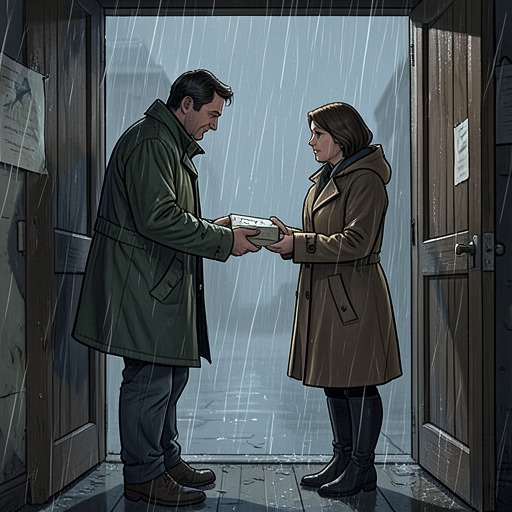
Anna
The Salt PathAnna is a chance acquaintance whose offer of a flat in Polruan changes the immediate prospects of the walkers at a moment when their life outdoors seems about to end. She first meets them beside the café at Talland Bay, where a conversation about her troublesome car gives way to an unexpected offer of somewhere to live.
The encounter at Talland Bay
Anna is described as a small, delicate woman with a strong northern accent. Sitting down beside the walkers, she complains that her car has broken down again, despite recently returning from the garage, and initially mistakes them for people staying in the caravans. Their rucksacks clarify that they are passing along the coastal path. When the car trouble comes up again, she decides she is tired of it and will take a taxi.
The setting makes the meeting a pause in the walkers’ exposed life on the path: the café is warm and dry, with coffee and a view across beds of bladderwrack. Anna is not introduced as a friend or former contact. The significance of the encounter grows from what happens between strangers over the course of a conversation.
Listening to Moth’s account
Over coffee, Moth tells Anna about golden summers spent under canvas and the couple’s life among changing weather and wild nature. His account presents their existence as both close to the natural world and set apart from ordinary busy life. Anna listens, absorbed by the stories. The narrative likens the spell they cast on her to Moth reading from Beowulf, making listening itself the bridge between their circumstances and her generosity.
Anna asks where they will go when summer ends. They explain that they have to stop: Moth is due to start university the following month, and they will need somewhere to stay. Her question brings the practical consequence of their wandering into the conversation. The life Moth has described is compelling, but it cannot answer the immediate need for a place to live.
The offer of a home
Anna reveals that she has a flat in Polruan whose tenants are moving out the next day. She has not advertised it yet and had planned to photograph it once they had left. Rather than treating the couple’s circumstances as a reason to refuse them, she offers to rent it to them and points out that the coastal path passes the front door.
The offer is concrete but modestly framed: Anna says the flat is small and suggests that Moth’s student loan or grant should be enough to cover the rent. The walkers check that she means it even after hearing about their situation. Anna confirms that she likes them and sees no reason not to offer the place. Her taxi arrives, and she leaves after saying she will see them the following night.
A turning point made possible by trust
The encounter’s force lies in its sudden reversal. The couple have been living outdoors and expect to have to find somewhere to settle as Moth begins university; Anna’s unadvertised flat supplies a possible answer at the very moment that need becomes explicit. Her offer does not erase their precarious circumstances, but it gives them a specific address and a route toward renting a home.
After Anna leaves, the couple clutch the napkin on which the address is written. The shock of something going right is so difficult to trust that they fear speaking might dispel it. Their response is physical and exuberant: they run outside, leap and shout among the bladderwrack beds, then dance in a circle with the café’s young owner. Anna’s importance in the narrative rests on this brief encounter: by listening without turning their hardship into a reason for exclusion, she makes a possible home emerge from an ordinary conversation.